Ghost Data: The Obsessives Reconstructing Entire Lives From Files You Thought Were Gone Forever
You sold that laptop for forty bucks on Facebook Marketplace. You factory-reset your old phone before trading it in. You dragged everything to the trash, emptied it, and closed the lid like a burial. You moved on.
They didn't.
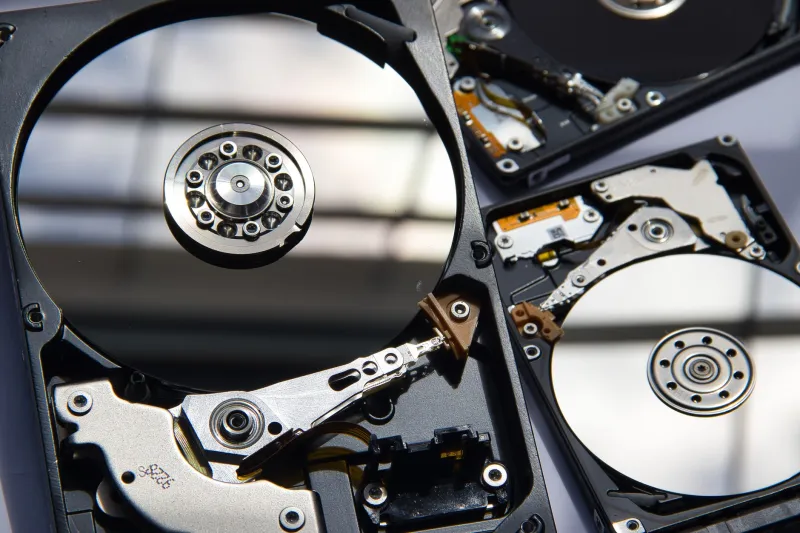
There's a corner of the internet — forums, Discord servers, a handful of subreddits — where people spend their weekends doing something most of us would find either fascinating or deeply unsettling depending on the day: they buy dead hard drives, broken flash drives, and water-damaged laptops from estate sales and thrift stores, and they dig. Not for money. Not for blackmail. Just because they can, and because whatever's in there won't stop calling to them.
They call themselves metadata archaeologists, data recovery hobbyists, or sometimes just "diggers." And what they're finding would make you rethink every device you've ever let leave your hands.
What's Actually Left Behind
Here's the uncomfortable truth about deleting files: most of the time, you haven't deleted anything. You've just told your operating system to stop pointing at it. The data itself sits in the same physical location on the drive, patient and untouched, waiting for something new to overwrite it. On a lightly used drive, that wait can last years.
Beyond the files themselves, there's an entire layer of information most people don't even know exists. Metadata — the invisible scaffolding attached to every document, photo, and email you've ever created — survives in ways that feel almost aggressive. A photo taken on your phone carries GPS coordinates, the exact timestamp, the device model, sometimes even the altitude. A Word document carries your name, your edits, the time you spent on each version, and often the names of every computer that ever touched it.
For the diggers, this stuff is like oxygen. One user on a recovery-focused forum described finding a set of vacation photos on a drive purchased at a Goodwill in Ohio. The metadata told them the photos were taken across fourteen days in 2011, in a town in rural Montana, on a device registered to a name they could partially piece together. The photos themselves showed a family — kids, a dog, a campfire. Nobody famous. Nobody notable. Just a family on a trip that happened thirteen years ago, now being quietly witnessed by a stranger in a basement.
"It's like finding someone's diary," they wrote, "except the diary is also telling you where they were standing when they wrote it."
The Tools Are Easier to Find Than You'd Think
This isn't some elite hacker operation requiring a computer science degree and a government contract. The software these hobbyists use — Recuva, TestDisk, Autopsy, PhotoRec — is free. Most of it is open source. Tutorial videos are everywhere. The hardware you need is a cheap USB drive enclosure and a device someone abandoned.
Estate sales have become a particular hunting ground. When someone dies and their family doesn't know what to do with a decade-old laptop, it often ends up in a box with the kitchen appliances. Diggers know this. Some are upfront about what they're doing; others aren't. A surprising number of old drives show up on eBay, listed as "untested" or "for parts," still carrying everything their last owner assumed was gone.
One recovery enthusiast described spending three months reconstructing the partial business records of a small restaurant that closed during the pandemic. They weren't looking for anything scandalous — they just wanted to see if the data was recoverable. It was. Invoices, staff schedules, a final email thread between the owners that read, in their words, "like a breakup and a funeral at the same time."
They never shared it publicly. But they read it.
The Ethical Fog
And that's where things get genuinely murky.
There's no law in the United States that cleanly addresses what happens when you buy a physical object and find someone else's data on it. The Computer Fraud and Abuse Act is built around unauthorized access to systems — but if someone sold you the drive, did they authorize access by implication? Legal scholars have been arguing about this for years without resolution.
The digger community itself is split. Some operate under a strict personal code: they recover, they document, they never publish identifying information. Others post their finds openly — redacted, they insist, but redaction is imperfect and the internet has a way of making the incomplete feel complete. A few have gone further, tracking down living people to return data, which goes over about as well as you'd expect.
"I found a woman's entire photography portfolio on a drive," one hobbyist posted in a thread that ran to hundreds of replies. "Thousands of photos, clearly professional work, all of it just sitting there. I reached out to tell her I had it. She was furious. Didn't want to know. Didn't want the photos back. Just wanted to know how I found her."
The silence after a message like that tends to say more than the thread itself.
Why They Keep Digging
Ask the people doing this why they do it and you get a range of answers. Some are genuinely interested in data recovery as a technical skill — the challenge of pulling coherent information from a failing drive is real and satisfying in the same way a puzzle is. Some are archivists at heart, uncomfortable with the idea of anything disappearing permanently.
But a lot of them will eventually say something quieter. Something about how strange it is to hold a complete record of someone's ordinary life and realize how little any of us actually vanish. The grocery lists. The half-finished cover letters. The photos taken at 2am that were never meant for anyone. The searches that would embarrass you in front of your family.
All of it, sitting there. Waiting.
"People think deleting is an ending," one digger wrote. "It's not. It's more like moving to a new city and leaving all your stuff in the old apartment. You're gone. The stuff isn't."
What You Can Actually Do About It
If this is making you want to go find every device you've ever owned, that instinct isn't wrong. A standard factory reset or drag-to-trash delete won't protect you. What will: full-disk encryption before you ever put data on the drive (so recovered files are unreadable without the key), or a proper secure erase — tools like DBAN for hard drives, or using the built-in secure erase functions on modern SSDs.
For phones, encrypting before resetting is the move. Most modern iPhones handle this automatically. Android is more variable.
None of this is complicated. It's just a step most people skip because they assume deletion means gone.
It doesn't. It never really did.
Somewhere out there, a drive you forgot about is sitting in a box at an estate sale, waiting for someone with a USB enclosure and a free weekend to decide your old files are worth their time. Whether that thought bothers you or not says something interesting about what you left on there.