3 AM Internet: The Communities That Built Themselves in the Dark
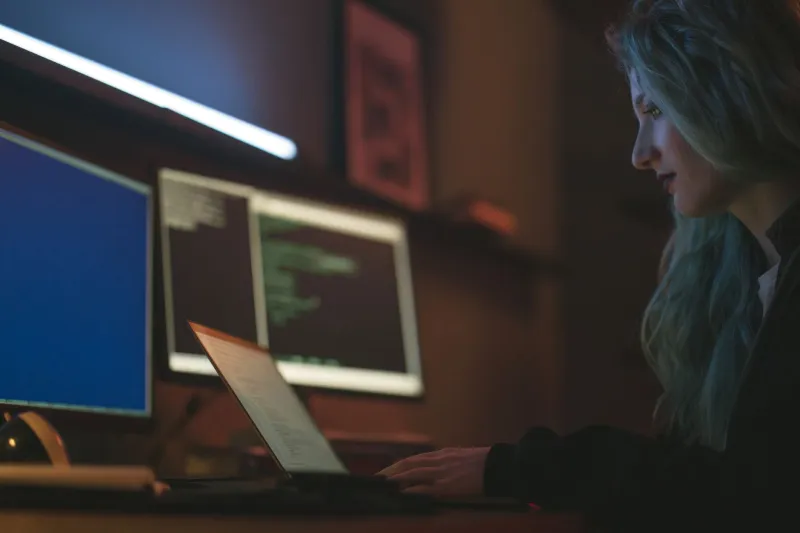
The internet doesn't actually sleep. But it does get quiet. And in that quiet — somewhere between the last tweet of the night and the first news alert of the morning — a different kind of online community does its real work.
Call it the 3 AM internet. It's not a place exactly, more like a window. A shift. The people who live in it will tell you it's the only version of the internet that still feels like something.
How You Find Them (Or Don't)
Let's be clear about something: most of these communities are not trying to be found. The ones that operate in deliberate temporal obscurity do so specifically because obscurity protects them. Peak-hour internet is loud, indexed, and crawled by bots that scrape content faster than moderators can react. The 3 AM internet is quieter, slower, and harder to monitor.
Some of these communities exist on Reddit, buried in subreddits with deliberately obtuse names, low subscriber counts, and posting rules that effectively limit activity to overnight hours in US time zones. Others live on Discord servers that are invite-only and enforce what one moderator described as a "lights out policy" — the server goes effectively dark during business hours, with channels locked or hidden, and reopens at night.
A few operate on older infrastructure entirely. Forums. IRC channels. Platforms that most people under 30 have never heard of. The obscurity isn't just temporal — it's architectural.
Why the Night
Ask people in these communities why they chose the middle of the night, and you get variations on the same answer: because everyone else is gone.
This sounds simple but it isn't. The internet during peak hours is a performance space. Everything you post is potentially being seen by a large, varied, unpredictable audience. Algorithms are at full power, amplifying and suppressing content based on engagement velocity. Brands are active. Journalists are lurking. The social stakes of saying anything are higher.
At 3 AM, the audience collapses. You're talking to a much smaller, self-selected group of people who made the same choice to be awake and online at the same weird hour. The social contract is different. People in these communities describe conversations that go places that daytime discussions can't — more honest, more strange, more willing to sit with something uncomfortable without immediately resolving it.
One longtime participant in a late-night music discussion community put it this way: "During the day, everything is about consensus. Someone posts something and immediately a hundred people are telling them whether it's good or bad. At night, you can just... wonder about something for a while. Nobody's in a hurry to be right."
The Global Time Zone Trick
Here's where it gets structurally interesting. "3 AM" isn't a universal constant — it's relative. And some of these communities exploit that relativity deliberately.
A community built around US Eastern time's dead hours (roughly 2–5 AM ET) is catching daytime in parts of Europe and evening in parts of Asia. Some of the most sophisticated late-night communities are actually running on a global skeleton crew — a handful of Americans who can't sleep, some Europeans starting their day, a few people in Southeast Asia winding down. The "night" community is actually an international community using temporal displacement as a filtering mechanism.
The filter works because most casual users don't bother to convert time zones. They log on when they're awake in their local time, find the community quiet, and leave. The people who stay are the ones who figured out the pattern — or who happen to be awake at the right time naturally, which itself selects for a particular kind of person.
Insomniac Americans. Night-shift workers. People with chronic pain or anxiety that keeps them up. International members whose schedules don't map neatly onto their local norms. The night filter doesn't just select for dedication — it selects for a specific kind of life.
What Gets Said
The content of these communities varies enormously, but there are patterns.
A lot of it is confessional in a way that daylight internet isn't. Not in the performative way of a Reddit confession thread that's optimized for upvotes, but genuinely unguarded. People talk about things they're not ready to talk about in front of a large audience. Grief. Uncertainty. Half-formed ideas that aren't ready to be judged. Relationships that don't make sense yet.
There's also a lot of deep-niche obsession. The kind of conversation where someone spends forty-five minutes discussing the specific production choices on a B-side from an album that sold twelve thousand copies in 1994. The kind of discussion that would get buried instantly during peak hours but can breathe at 3 AM because nobody's competing for attention.
And there's creative work. A surprising amount of creative work. Writers sharing drafts they're not ready to publish. Musicians posting rough recordings. Artists sharing things they're genuinely uncertain about, in front of an audience small enough that the risk feels manageable.
The Moderation Question
Running a community that deliberately operates in off-hours creates unique moderation challenges. Moderators who are themselves part of the night-community have to be awake when the community is active, which means they're often running on the same insomniac schedules as the members.
Some communities solve this by having international mod teams that rotate through time zones. Others accept that overnight hours mean lighter moderation and build community norms strong enough to compensate. A few have essentially given up on real-time moderation during their active hours and rely on retroactive cleanup.
The communities that survive long-term tend to be the ones that built culture strong enough that formal moderation is less necessary. When a community is small, self-selected, and operating in a space that feels genuinely separate from the rest of the internet, the social pressure to maintain the vibe is often enough.
Why It Matters That They Exist
There's something worth paying attention to in the fact that these communities exist at all — that people are deliberately scheduling their online social lives around the margins of peak internet traffic, not because they have to but because they want to.
The mainstream internet has become increasingly optimized, increasingly fast, increasingly oriented toward content that performs well in the first thirty seconds of its existence. The communities that thrive at 3 AM are a kind of rejection of that. They're betting on slowness. On small audiences. On conversations that don't go anywhere in particular.
Whether that's a sustainable model or just a nostalgic one is genuinely unclear. But for now, the lights are on somewhere, and the conversation is going.
You just have to be awake to find it.